This page explores how white supremacy culture's number one strategy is to make us afraid. When we are afraid, we lose touch with our power and are more easily manipulated by any promise of safety, even as we come to slowly learn that safety dependent on violence is not safe at all.
The invitation on this and every page is to investigate how these characteristics and qualities lead to disconnection (from each other, ourselves, and all living things) and how the antidotes can support us to reconnect. If you read these characteristics and qualities as blaming or shaming, perhaps they are particularly alive for you. If you find yourself becoming defensive as you read them, lean into the gift of defensiveness and ask yourself what you are defending. These pages and these characteristics are meant to help us see our culture so that we can transgress and transform and build culture that truly supports us individually and collectively. Breathe into that intention if you can.
The invitation on this and every page is to investigate how these characteristics and qualities lead to disconnection (from each other, ourselves, and all living things) and how the antidotes can support us to reconnect. If you read these characteristics and qualities as blaming or shaming, perhaps they are particularly alive for you. If you find yourself becoming defensive as you read them, lean into the gift of defensiveness and ask yourself what you are defending. These pages and these characteristics are meant to help us see our culture so that we can transgress and transform and build culture that truly supports us individually and collectively. Breathe into that intention if you can.
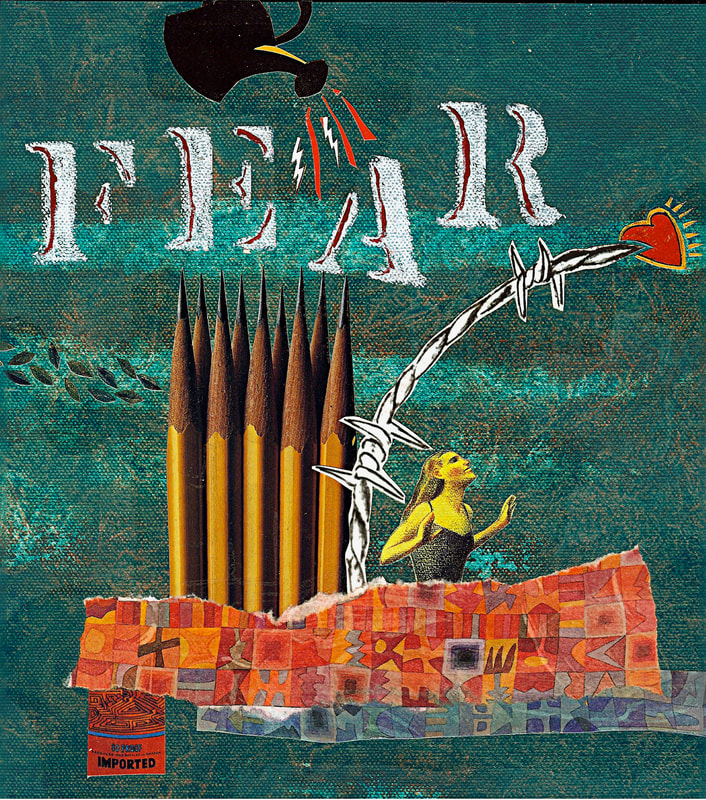
Danielle Spratley on Fear: One thing that comes up for me is how fear lives in the body after trauma and how the (my) body feels uneasy in (relative) safety and love because it's waiting for the next trauma - and so, when it comes, it compounds on all the other trauma that lives there and still needs to be exorcised. And this turns safety and love into things to be feared, because they are distractions from the vigilance my body lives in. It is one way (my) fear makes the (my) body pliable to trauma and makes connection and belonging seem like danger. |
White supremacy, white supremacy culture, and racism are fear-based. White supremacy uses fear to disconnect ...
White supremacy, white supremacy culture, and racism use fear to divide and conquer, always in the service of profit and power for a few at the expense of the many. White supremacy culture cultivates our fear of not belonging, of not being enough. Living in fear that we are not enough, white supremacy culture teaches us to fear others (or hate others) in an attempt, sometimes overt, sometimes unspoken, to prove to ourselves that we are ok. An easy way to prove we are ok is to point the finger at all those who are not. An easy way to belong to each other is to hate and fear all the others who do not (thank you Cristina Rivera Chapman). If we want to defeat white supremacy, then we have to get skilled at meeting our fear(s) so that we are not manipulated by those who delight in seeing us go after each other (and ourselves) while they maintain power and control. If we want to transgress white supremacy, we have to get good at belonging - belonging to ourselves and welcoming each other into belonging. This requires emotional maturity and responsibility, mutual accountability and support, and knowing ourselves well enough to know when we can step up to belonging and when we need to step back and take care of ourselves. This is not easy. This is necessary. And the prize is belonging - belonging to beloved community. |
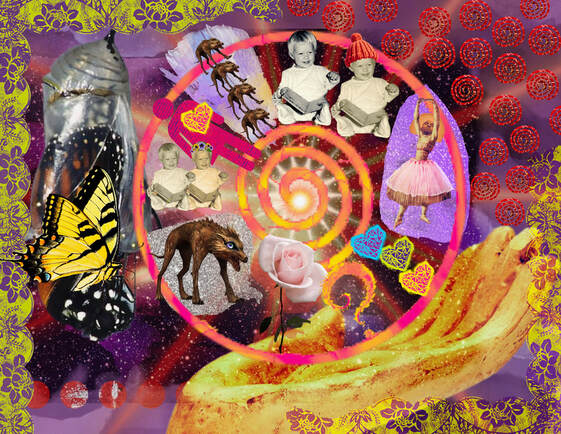
White supremacy culture's number one strategy is to make us afraid. All of the characteristics listed on the website are driven by fear. We fear not being good enough, not being enough, not deserving love or happiness. When we are afraid, whatever the reason, especially when we don't have the skills to hold that fear, we are easily manipulated by any promise of safety. The promised safety is false because it is always based on the abuse and misuse of power that shows up as everything from microaggressions to deadly violence directed at whoever or whatever we are told to be afraid of. Often it is the racialized other. Often it is ourselves.
Paul Kivel in his book Living in the Shadow of the Cross talks about
how binary either/or thinking is both driven by and reproduces fear.
how binary either/or thinking is both driven by and reproduces fear.
|
The antidotes to fear include first and foremost naming it when it arises, whether in a group or in us individually. We must collectively and individually develop skills to meet our fear, sit with our fear, name our fear, and work to avoid letting fear drive our beliefs, actions, and decisions. I am so excited by the growing understanding of somatics in navigating fear and trauma, which is one of the ways we can begin to change our relationship to the fears that we hold in our collective and individual bodies. Meditation, silence, music, dancing, poetry, drawing, singing, resting, brainstorming, compassion ... we have lots of options for how to meet and sit with our fear. If you and your community do not yet have a fear practice, begin to strategize what that might look like for you. Luckily for us, resources abound from Resmaa Menakem’s My Grandmother’s Hands to adrienne maree brown’s Pleasure Activism to a wide array of meditation and body movement options. Choose options that are grounded in respect for lineage and movement building.
|
Kai Cheng Thom writes,
in her life changing book I Hope We Choose Love (p. 93): We need community practices and institutions that acknowledge the social conditions that breed violence - unchecked capitalism, misogyny, a policing system that profiles and fails to protect communities of colour, inadequate social services - and provide pathways to healing for hurt people. We need more hospitals and social programs, not more prisons and police. And we will have to give up our defences, our time-worn defences of dissociation and numbness, as well as those of rage and revenge. We have to be able to care, even when it seems impossible because caring would destroy us. We have to believe that we will survive each other, because there is something waiting for us when the ice melts. Queer community taught me that, once, a long time ago. |
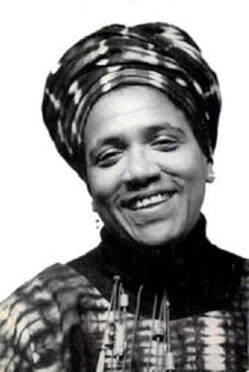
Audre Lorde
|
"Next time, ask: What's the worst that will happen? Then push yourself a little further than you dare. Once you start to speak, people will yell at you. They will interrupt you, put you down and suggest it's personal. And the world won't end. And the speaking will get easier and easier. And you will find you have fallen in love with your own vision, which you may never have realized you had. And you will lose some friends and lovers, and realize you don't miss them. And new ones will find you and cherish you. ... And at last you'll know with surpassing certainty that only one thing is more frightening than speaking your truth. And that is not speaking.” |
Refusing to fear requires ...
|
Two or Three Things I Know For Sure ... Dorothy Allison Two or three things I know for sure, and one of them is what it means to have no loved version of your life but the one you make; Two or three things I know for sure, and one of them is the way you can both hate and love something you are not sure you understand; Two or three things I know for sure, and one of them is just this – if we cannot name our own we are cut off at the root, our hold on our lives as fragile as seed in the wind; Two or three things I know for sure, and one of them is that no one is as hard as my uncles had to pretend to be; Two or three things I know for sure, but none of them is why a man would rape a child, why a man would beat a child; Two or three things I know for sure, and one of them is that change when it comes cracks everything open; Two or three things I know for sure, and one of them is how long it takes to learn to love yourself, how long it took me, how much love I need now; Two or three things I know for sure, and one is that I would rather go naked than wear the coat the world has made for me; Two or three things I know, two or three things I know for sure, and one of them is that to go on living I have to tell stories, that stories are the one sure way I know to touch the heart and change the world; Two or three things I know, two or three things I know for sure, and one of them is that if we are not beautiful to each other, we cannot know beauty in any form; Two or three things I know for sure and one of them is that telling the story all the way through is an act of love; I can tell you anything. All you have to believe is the truth. Excerpted from book of the same name, 1995. |
a Tema thought I think about all the times I have been shamed for my feelings, mostly by ciswhite men, sometimes by other ciswomen who have been cowed by this culture. I remember how my father would often attempt to silence me with "why do you have to be so emotional all the time" in a household swimming in unspoken feelings where I was the only one cluelessly bold enough to try and share mine. The most recent time this happened, a man told me he was waiting for me to "turn a corner," get over my anger, and return to civility. My offense, apparently, was communicating, at a safe distance and in writing, my distress at his failure to take responsibility for causing harm. I have come to hate the word "civil" - a call to be polite in a culture where too many of us have internalized a fear of the messiness of feelings that, even expressed lightly, disrupt our culture's need for control. In her essay Uses of the Erotic, Audre Lorde writes that when "we begin to recognize our deepest feelings, we begin to give up, of necessity, being satisfied with suffering and self-negation, and with the numbness [i.e. civility] which so often seems like their only alternative in our society. Our acts against oppression become integral with self, motivated, and powered from within...." "Recognizing the power of the erotic within our lives can give us the energy to pursue genuine change within our world, rather than merely settling for a shift of characters in the same weary drama." We have been raised to fear the yes within ourselves, our deepest cravings. In this video, Audre Lorde reads the entire essay.
|
A former neo-Nazi talks about the role of fear in explicit white supremacy ideology; for more listen to this interview. Tema's Note: The fear cultivated by white supremacy culture is, as described at the top of this page, seeded in the fear of (not) belonging, of (not) being good enough. Those who have left white nationalist groups point to a central theme in why they joined in the first place. Recruitment into these communities never starts with the ideology of white supremacy, it starts with the invitation to belong. The ideology, as Picciolini states here, comes later. I think those of us organizing for racial justice sometimes get confused, believing that our "rational" or "moral" arguments on behalf of racial justice will bring people into the movement. We need to consider our ability to offer belonging and welcome too. |
|
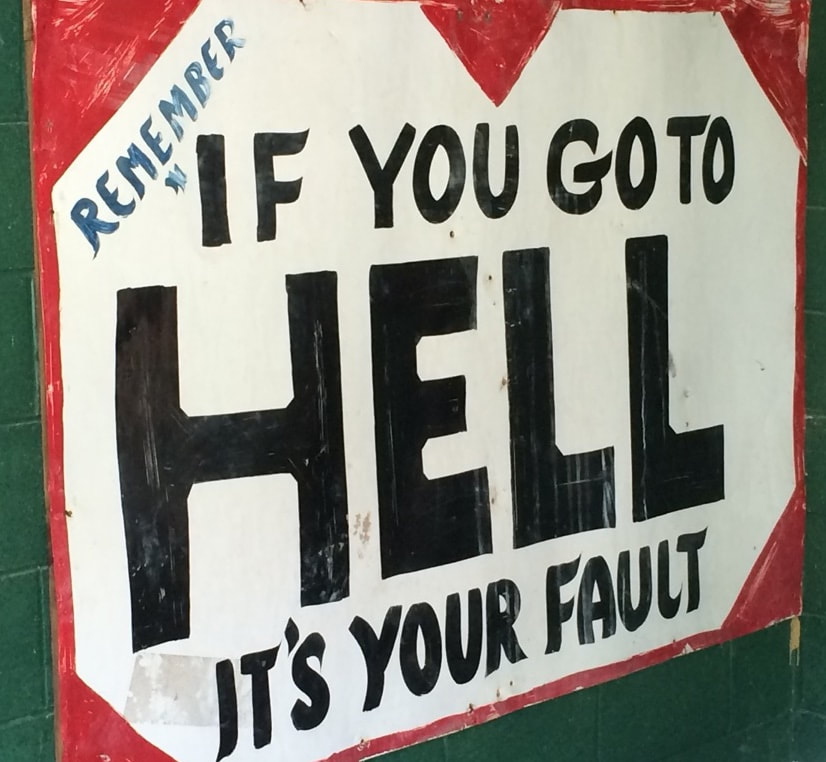
Poem by Tema Okun
|
Fear arrives,
a baby bird in the belly a soft spark invited by breathing a holy dark whispering, hungry. I think and think, I turn and twist this way, that way, I can’t push it, I can’t pull it off. Not now not forever. The trick is to lean, to listen for breathing, shelter it safe drop down deep into its soft howl. |
This fear begets
wonder, a hello, an aperture to a hunt stripped clean. It calls a warning a calling a curling in. It carries a candle. It strips skin with a smile and I know I must even when I can’t let it be ordinary, let it be beautiful like a pebble nestled in the stream is ordinary, is beautiful. |
It is
after all a miracle, this knowing where I can, I must go. |