This page explores our cultural assumption that the goal is always to be/do/get more and be/do/get bigger. This leads to an emphasis on what we can "objectively" measure - how well we are doing at being/doing/getting more - as more valuable than the quality of our relationships to all living beings.
The invitation on this and every page is to investigate how these characteristics and qualities lead to disconnection (from each other, ourselves, and all living things) and how the antidotes can support us to reconnect. If you read these characteristics and qualities as blaming or shaming, perhaps they are particularly alive for you. If you find yourself becoming defensive as you read them, lean into the gift of defensiveness and ask yourself what you are defending. These pages and these characteristics are meant to help us see our culture so that we can transgress and transform and build culture that truly supports us individually and collectively. Breathe into that intention if you can.
The invitation on this and every page is to investigate how these characteristics and qualities lead to disconnection (from each other, ourselves, and all living things) and how the antidotes can support us to reconnect. If you read these characteristics and qualities as blaming or shaming, perhaps they are particularly alive for you. If you find yourself becoming defensive as you read them, lean into the gift of defensiveness and ask yourself what you are defending. These pages and these characteristics are meant to help us see our culture so that we can transgress and transform and build culture that truly supports us individually and collectively. Breathe into that intention if you can.
|
Progress is bigger and more shows up as:
|
|
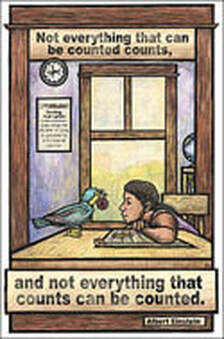
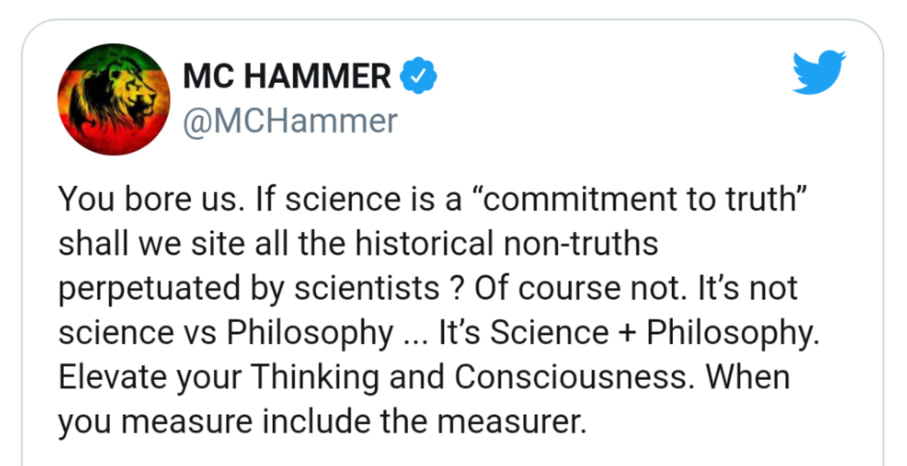
Quantity over quality shows up as:
|
|
|
|
Antidotes include:
|
|
Probably the central story of our culture—which I think has replaced a lot of the religious stories that used to be at the heart of our culture—is the story of progress.
What we say is: it is possible, through human ingenuity, to create a utopia. We have a story that tells us that human beings started as ignorant savages and are moving through a series of progressive steps, in which, at every point, they get cleverer, they get richer, they get smarter, they develop technologies which allow them to live longer, they learn more. Eventually, that ends with us probably leaving the planet and colonizing the stars, or living forever, or downloading our brains onto silicon chips. It’s a kind of technological rapture that sees time in a linear fashion rather than in a cyclical fashion. It sees an endless series of steps, every one of which improves things in the material sense from the one before. I don’t think it’s historically true. Actually, what happens is that things tend to rise and fall in cycles. But it has an enormously powerful grip on us, and it informs everything from our view of the past, which we increasingly believe was a savage place in which our lack of technology and science drove us to a sort of misery and poverty, to our view of the future, in which we assume that more technology and more scientific focus and more centralization will take us to a kind of paradise. And so we have this story that we believe in which everything continues to get better every generation, and our job is to keep that process going. I think once you believe that, then you are stuck in a very linear narrative. You are unable to see, you are unable to learn much from the past on your own, and you are probably unable to learn much from the mistakes of the present as well. |
|
|
Artwork by Tema Okun.
|
|
Dr. Barbara Holmes, in her groundbreaking book Race and the Cosmos, writes (pp. 28-29): We can now admit in retrospect that Western cultures shared a profound naiveté about liberation. The path toward an egalatarian society seemed linear and goals were deemed to be determinate and reachable. Yet, deterministic models of freedom created mirages of confusion that lured the unwary. The idea of liberation as a definitive "overcoming" enticed a generation with phantom promises of "progress." ... I am suggesting that we view issues of race and liberation from the perspective of the cosmos, and that we begin to incorporate the languages of science into our discussion of liberation. This is a reasonable choice, given the reality that the universe is an integral aspect of any human endeavor, even when it is a taken-for-granted backdrop for our activities. I am challenging all justice seekers to awaken to the vibrant and mysterious worlds of quantum physics and cosmology. Recent discoveries on cosmic and quantum levels are as dramatic as the realization that the sun does not rotate around the earth. All of the narratives that frame reality have been unsettled by the Hubble telescope's unblinking eye and strangely responsive but unseen quantum elements. From cosmic and quantum realms we learn that we are connected to one another in unexpected ways. Theoretical physics suggests that, even when separated, entities that have once been in contact will react to changes in others. The truth is that our images of life in community changed when we realized that the world was not flat. Everything will change again when interhuman dominance is seen as a false construct in the universe. A level playing field is being offered to those who can grasp the concepts as tangible precursors of freedom. As amazing as it may seem, the physical sciences offer creative rhetorical tools that may help us to rethink the dynamics of race relations within the broader context of the cosmos. |
There is so much more that could be said about the paradigm shift that Dr. Barbara Holmes, a spiritual teacher, activist, and scholar focused on African American spirituality, mysticism, cosmology, and culture (among others) is offering here. I am just beginning to explore this territory myself, so will simply offer this enticement to dig deeper, read her book, and see where it leads you and us as we contemplate a completely transgressive notion of both progress and liberation.
|
We can choose to be accountable to people and to principles. Accountable is another word for support; being accountable means to support people and to support principles or values knowing that we need to hold the inevitable tensions that occur. Our current culture prioritizes profit over people; we vision a world where people and all living beings come first, where we honor the idea of seven generation thinking and the interdependence of all with all. We honor realizing that in the short term people need jobs and housing and health care and sometimes, in order to pay the bills, we have to work for corporations or institutions that are perpetuating the devastation of humans and animals and plants and air and water and sky. Nonetheless we do all in our power to maintain our connection to each other and to the trees and to spirit and to all that nurtures our ability to thrive together. We practice over and over again so that we grow our ability to prioritize each other rather than power or profit.
|